
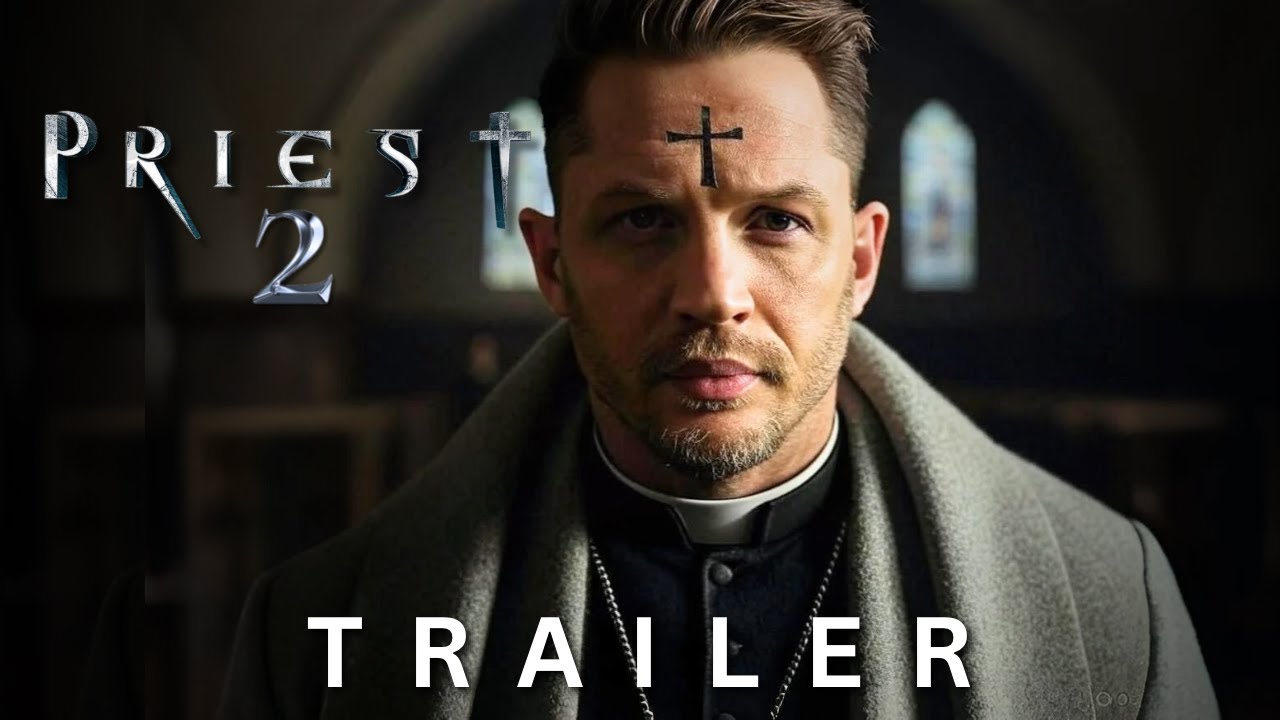
A Sequel That Trades Certainty for Conviction
There are sequels that coast on familiarity, and then there are sequels that arrive bearing questions. Priest 2: Faithless Dawn belongs to the latter category. It does not simply sharpen the blades of its predecessor; it asks whether those blades still have a reason to swing. The result is a bruising, often exhilarating action-horror that doubles as a meditation on belief under siege.

Tom Hardy’s Hooded Hunter: Faith with Fractures
Tom Hardy anchors the film with a performance that feels lived-in and weathered, as if faith itself has left scars on his body. His hooded holy hunter is less a crusader than a survivor, moving through the ruins of doctrine with the posture of a man who has seen prayers fail. Hardy’s physicality sells the combat, but it is his restraint between fights that lingers. He allows silence to speak, turning pauses into confessions.

Performance Highlights
- Tom Hardy: A brooding, tactile presence that grounds the film’s excess.
- Maggie Q: Agile and incisive, bringing wit and lethal grace to the shadows.
- Christopher Obianuju: A steady counterweight, embodying resolve when the world buckles.
Maggie Q and the Power of Precision
Maggie Q’s role could have been a familiar archetype, but she imbues it with sharp intelligence. Her action scenes are clean and purposeful, edited to emphasize intention rather than chaos. When she enters a frame, the film tightens. Her character’s moral calculus complicates the narrative, suggesting that survival is not the same as salvation.

Direction, Tone, and a Bleak Canvas
The film’s direction leans into austerity. The color palette favors ash and ember, as if dawn itself were unsure whether to rise. Violence is staged with clarity and consequence; every strike lands with weight, and every victory feels temporary. This is not spectacle for spectacle’s sake. It is brutality as language.
World-Building and Atmosphere
- Apocalyptic environments that feel scorched rather than stylized.
- Sound design that amplifies dread without drowning the drama.
- A score that pulses like a warning rather than a celebration.
Vampires, Theology, and Moral Tension
The film’s vampires are less monsters than symptoms. They thrive where certainty collapses, feeding on fractures in belief. This reframing gives the action a philosophical edge. Battles are not just physical contests but arguments, each swing of the blade an assertion about what still matters when doctrine fails.
Pacing and Structure: When Momentum Wavers
For all its strengths, Faithless Dawn occasionally overindulges its mythos. A midsection detour into lore slows the film’s momentum, explaining mysteries that were more potent when left implied. Yet the final act recovers with purpose, funneling doubt and despair into a lean, ferocious resolution.
Overall Verdict
Rating: 7.5/10
Priest 2: Faithless Dawn is a sequel that respects its audience by trusting them with ambiguity. It is loud, bloody, and unapologetically grim, but beneath the carnage lies a thoughtful inquiry into what survives when faith falters. Tom Hardy delivers a performance of haunted conviction, supported by a cast and craft team committed to making every blow count. This is not a film that asks you to believe; it asks you to consider what belief costs.