




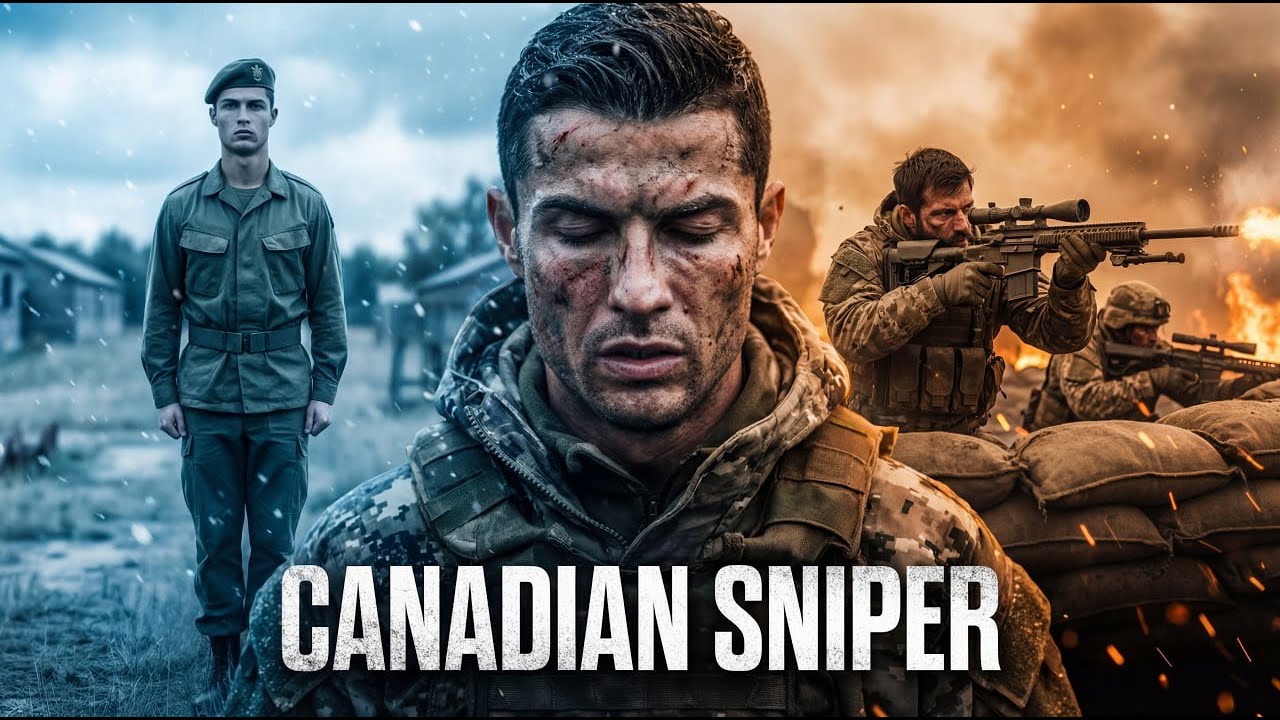
An Icy Battlefield with a Human Pulse
Canadian Sniper (2026) arrives carrying the familiar weight of modern military thrillers, yet it distinguishes itself by trading bombast for atmosphere. Inspired by the lore of Canada’s elite long-range marksmen, the film frames combat not as spectacle but as consequence. Director and writers understand that a sniper story lives in silence, patience, and the unbearable intimacy of distance.

From its opening images of frozen wilderness, the movie establishes a visual and emotional temperature: cold, restrained, and quietly menacing. This is a war film that prefers tension to noise, where the most important moments occur between heartbeats rather than explosions.

Story and Structure
The plot centers on Logan Ward, a legendary Canadian sniper tasked with dismantling a covert terrorist network threatening North American security. His mission pairs him with intelligence officer Rachel Summers, whose analytical mind contrasts with Logan’s lived experience in the field. Their journey spans isolated tundra, secret installations, and shadowy border zones, each location adding another layer to the film’s sense of paranoia.

What elevates the narrative is not the mission itself but the way it unfolds. The screenplay allows doubt to creep in gradually. Information arrives incomplete. Loyalties feel provisional. As the conspiracy tightens, the film asks a quietly devastating question: what happens when the skill that makes you invaluable also makes you profoundly alone?
The Weight of the Past
Logan’s personal history is not delivered in blunt exposition. Instead, it surfaces in gestures, pauses, and the way he surveys a landscape before committing to action. The past is something he carries, not something the film lectures us about. This restraint gives the character a gravity that many action heroes lack.
Performances
Chris Hemsworth brings a surprising stillness to Logan Ward. Known for charisma and physical presence, he pares his performance down to minimalism. His Logan is a man trained to disappear, and Hemsworth plays him as someone who has nearly succeeded. The performance relies less on dialogue and more on posture, breath, and watchful eyes.
Scarlett Johansson’s Rachel Summers provides the film’s moral and intellectual counterbalance. She is not written as a mere support role but as a co-equal force in the narrative. Johansson imbues Rachel with calm authority, suggesting a character who understands both the mathematics of intelligence work and its human cost.
- Chris Hemsworth as Logan Ward: restrained, introspective, quietly intense.
- Scarlett Johansson as Rachel Summers: composed, intelligent, and emotionally grounded.
Direction and Visual Language
The film’s visual approach favors long lenses, compressed space, and deliberate framing. Snow-covered landscapes are not romanticized; they are obstacles that swallow sound and distort perception. The camera often lingers, forcing the audience to share the sniper’s patience and unease.
Action scenes are staged with clarity and purpose. There is no confusion about geography, yet there is plenty of moral ambiguity. Each engagement feels costly, not triumphant. This is a film that understands that precision does not erase responsibility.
Sound Design and Score
Silence is the film’s most effective tool. When music does appear, it is sparse and atmospheric, reinforcing mood rather than dictating emotion. The sound design emphasizes wind, breath, and distant movement, pulling viewers into the heightened awareness of the sniper’s world.
Themes Beneath the Scope
Canadian Sniper is less interested in celebrating military prowess than in examining its psychological toll. The film explores isolation, trust, and the ethical weight of long-distance violence. It suggests that seeing too clearly, for too long, can distort one’s sense of self.
The partnership between Logan and Rachel becomes the film’s emotional anchor. Their evolving trust hints at a fragile hope: that understanding, rather than firepower, may be the most valuable weapon of all.
Pacing and Tone
The deliberate pacing may challenge viewers expecting constant action, but it is precisely this patience that gives the film its power. By slowing down, the movie allows tension to accumulate organically. When violence does occur, it feels earned and unsettling rather than routine.
Final Verdict
Canadian Sniper (2026) stands as a thoughtful entry in the modern military thriller genre. Anchored by disciplined performances and a director confident in restraint, the film finds drama in stillness and meaning in moral uncertainty. It does not glorify the rifle; it examines the person behind it.
For viewers willing to meet it on its own measured terms, this is a cold, compelling film that lingers long after the snow settles and the final shot fades.
Who Should Watch This Film
- Fans of grounded, character-driven war thrillers.
- Viewers interested in the psychological side of modern combat.
- Audiences who appreciate tension built through atmosphere rather than spectacle.